
I like a using a sexy looking axe. I like looking at one too.
Most of us use them to split firewood. Splitting mauls, regular forest axes and hatchets are the most common and generally used heavy metals. Of course there are specialized axed used by those who need such tools however most of us do not get to fell/chop down trees, hew timber to frame a building. And if a tree has to come down in or around the towns we live in the chainsaw generally is the go to tool. I have never felled a tree with an axe and these days it might be a romantic notion, unless you are in a bush crafting/survival situation or you do really live out there and live that lifestyle.
Consciously choosing to use only hand tools for this spoon carving craft I get to work with a very cool and useful tool. The carving axe. Spoon carving and other sloyd projects provided me the opportunity and a solid reason to pick up develop useful and safe axe skills.
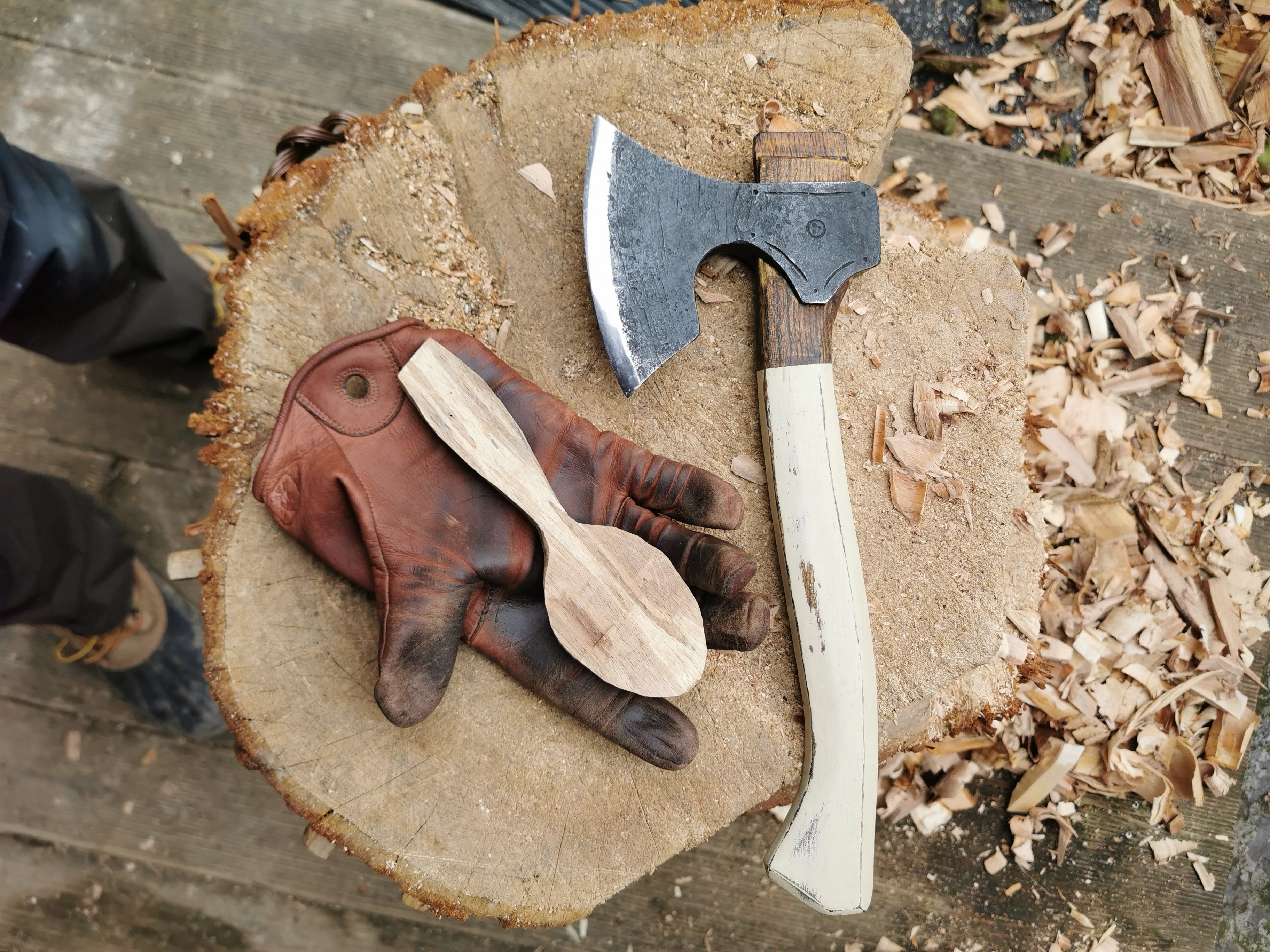
The clumsy blanks for first spoons I carved were roughed out with a Gransforsbruk Outdoor axe. This was a light weight bush crafting axe that easily packed in any daypack and promised to take care of most chores around camp. A handy tool but not really suited to carving.
I read more and after gathering a bit more information I bought my first carving axe. It was the large Gransforsbruk carving axe with a total weight of 1kg. No comparison with the Outdoor axe other than that it was made by the same producer whose reputation was as solid as the tools it made. Honestly, it took me a while to become friends with this beast. Initially I didnt like the shape of the bit but over the course of the first year I began to appreciate the “form follows function” design. After all a famous Swedish carver (Wille Sundqvist) had a hand in its development.
I consider this axe my work horse. This heavy weight axe wastes large amounts of wood quickly, is very precise with sufficient practice and dances the lighter steps/delicate cuts very accurately as well. This one is a lifelong keeper.
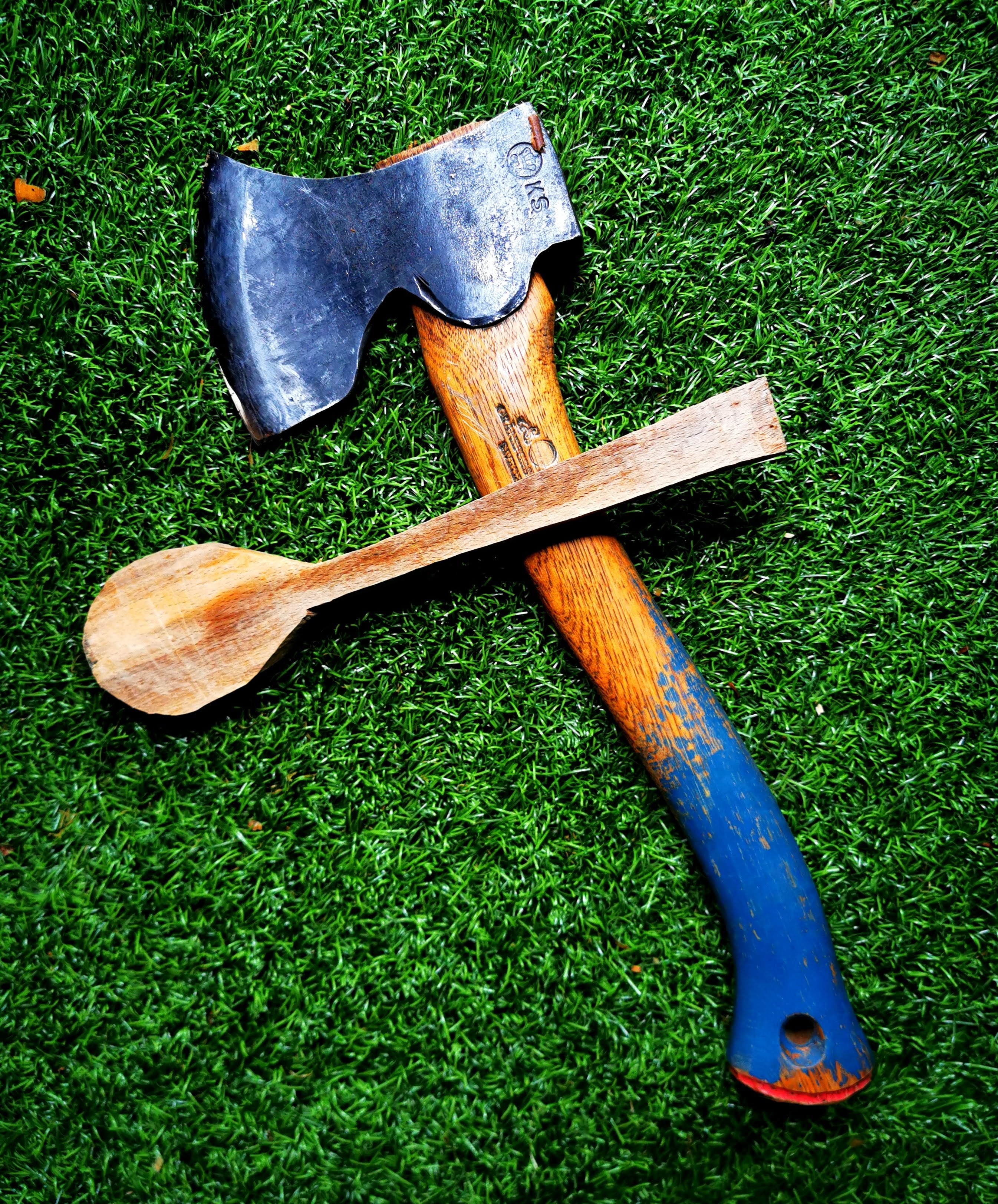
I love using the axe. I love my carving axes. I own two. I have coined the term axercise to describe what I experience when hewing spoon blanks, birds, a kuksa or bowl. My left arm is kept in good shape using the axes. I love being able to shape a rough piece of green wood into a usable blank, chopping and slicing right down to my pencil outline of the shape I want to carve on a given piece of wood. I get great satisfaction from being able to shape my blanks as close as possible to the line. This saves a lot of knife work, the next step in the spoon carving process.
I still have a lot to learn in terms of what I can do with my axes, especially in terms of bowl and cups etc. So much to learn and that is something that keep driving me and motivates me to continue.
My first carving axe was and is the Gransforsbruk large carving axe. Work horse. Got to blade. Named it “Wood Bite”. A keeper.
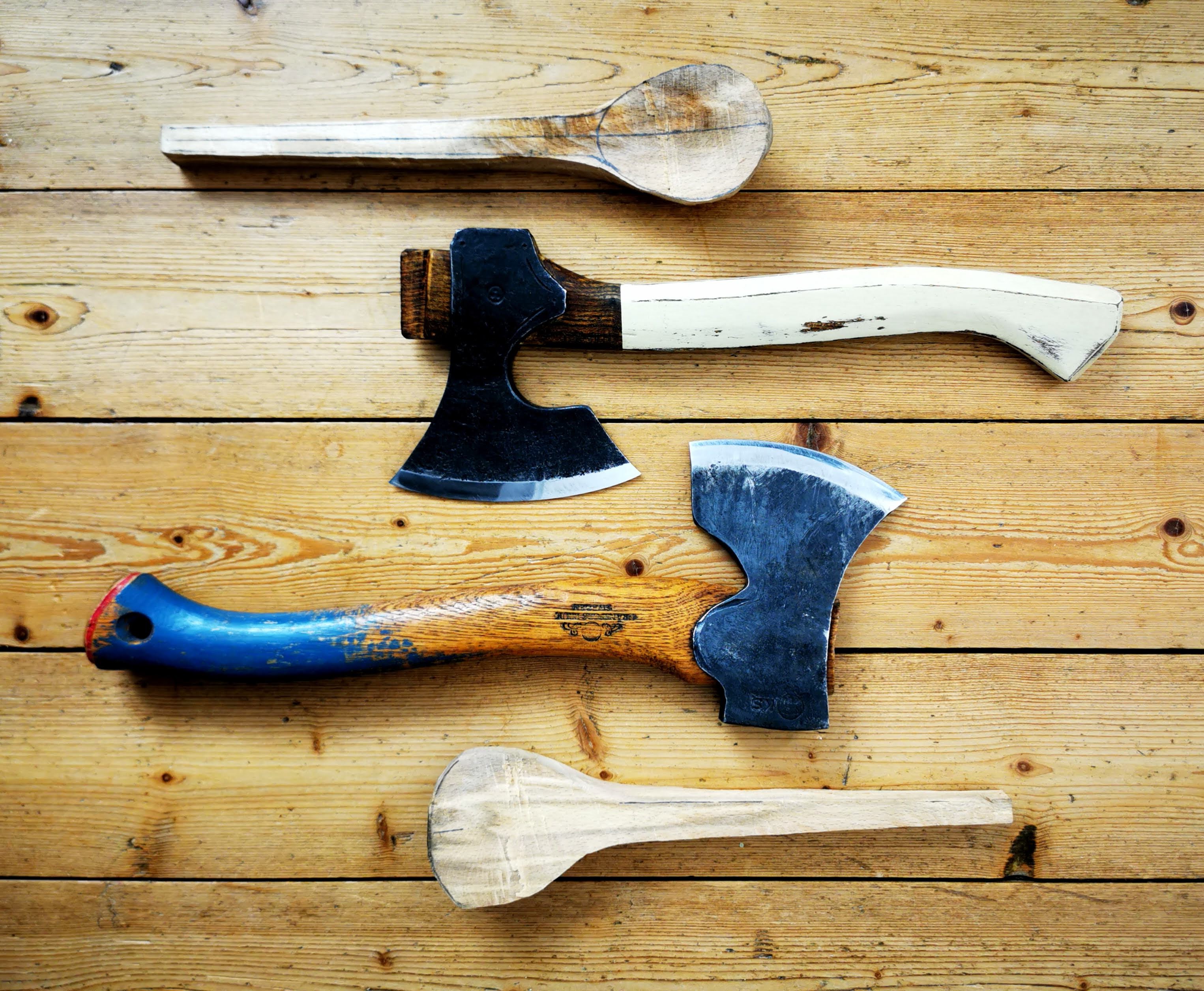
My second axe was a Hans Karlsson carpenters/carving axe. Sweet tool. Great design. Loved using it. Its only downside was the handle, a bit too thin for my large hands. I would have loved to have kept it but I sold it to justify a new purchase and to prove to myself and to my wife that I was not going to fall down the axe collector rabbit hole.
My third, now my second axe is a fabled Nic Westermann carving axe. One of the last ones he made. It came up for sale on the instagrams and I knew it was a now or never situation. I just had to have it and instinctively knew that if I did not purchase this offer that I would never get another chance at one of Nics axes. I should add that I own most of Nics forged excellence and committed to getting as many of them as I could before Brexit became a thing. Being on his waiting lists was the price for being able to use some fine quality green wood working blades. I know I made the right decision.
I open my axe and saw bag, a weathered old leather doctors bag I garnered on eBay. It has leather covered curved brass rod reinforced handles. My saws share this bag with two Silky saws, my leather work gloves and 60cm section (three folding lengths), a broken off bit of a 2m measuring meter (euro style).
I take out both axes, remove their sheaths in turn, put on my gloves and select a billet from the opened plastic bag in which they stew. The billet is studied, its sides cleaved and cleaned with the razor sharp axe blade, before the outline of the chosen spoon shape is traced with a pencil onto its wooden surface.
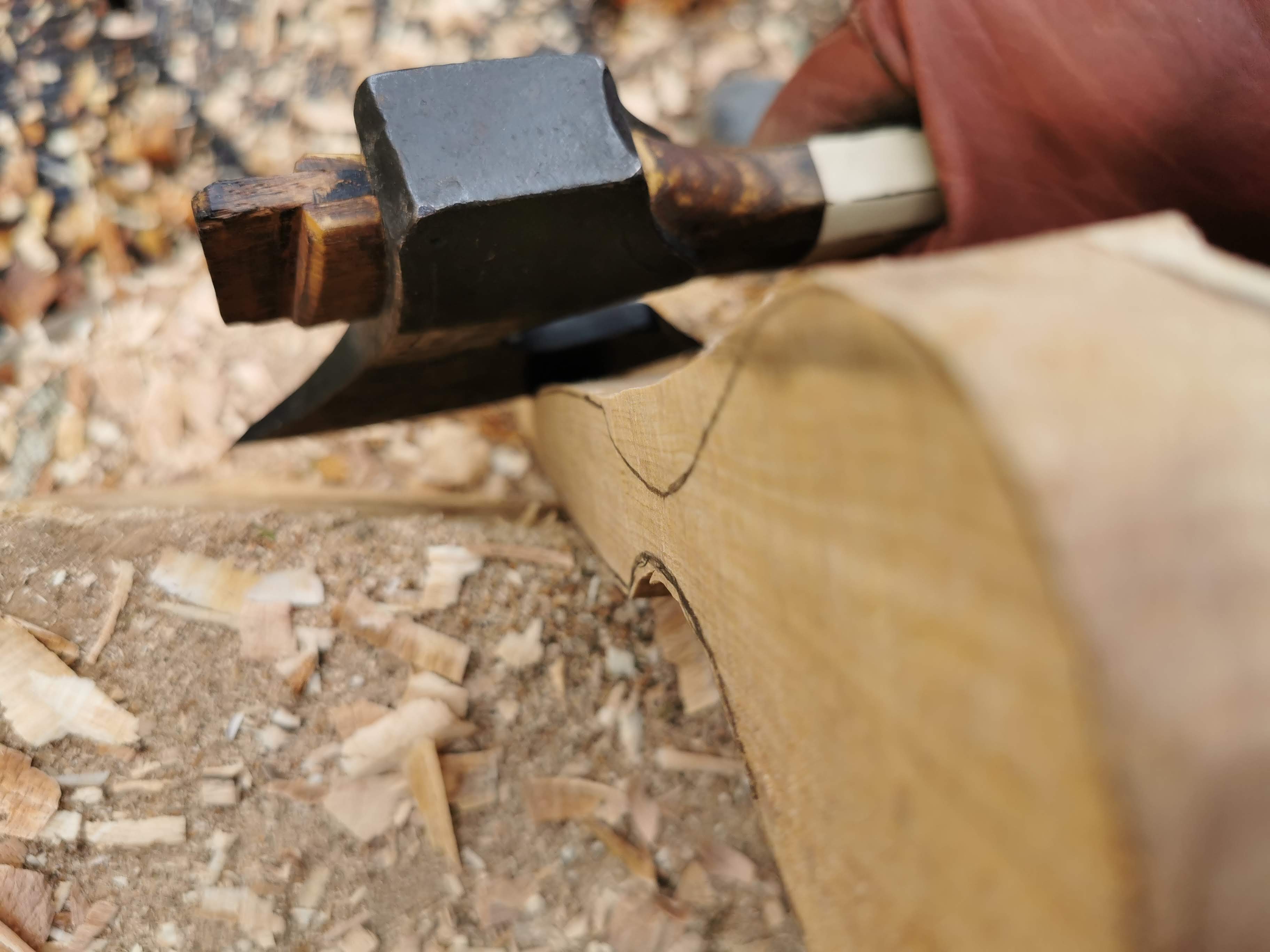
I always begin on the right side of the bowl, hewing from the widest part of the bowl and following the curve towards its tip. I will shamelessly employ the Guillotine or bump cut method to diminish the chance of an errant blow chopping inside the line and forcing an unwelcome adjustment. Then I address the left side of the bowl before I turn the blank on end and work down towards the shoulder/handle transition. First the now right side and then turning the blank to work the left side transition. Again I flip the spoon blank and begin to chop down the handle length from the end of the handles right side before finishing the blank by chopping/slicing down its left side. As close to the line as I can get is always dependent on the grain. Interlocking grain makes this a tricky process.
I love using my axes. Regular use and axercise maintain muscle strength and memory while longer breaks result in quicker fatigue and accuracy deficiencies. So, I try to maintain regular axe use.
Do I need more axes? No is the short answer. But I am human, I am a carver. I use axes and so that is enough justification to admit that I want more axes than I could realistically use on a regular basis. The saying is that one can never have too many axes and of course I want more axes. But Is still am a pragmatic realist.
Three would be good too. I can justify three. There are three that could fill that last spot: a heavy Woodsmansfinest Journeyman model, the Svantje Djarv little Viking or on of those Kalthof axes. Currently I have not desire or want for more sharp heavy metal.
I use the tools I own and have established a real connection to them. They are a part of me and give me great joy while using them.
Axercise rocks.
 Blade & Wood